Intellectual Property And Limits Of Comic Freedom In Baburao Controversy
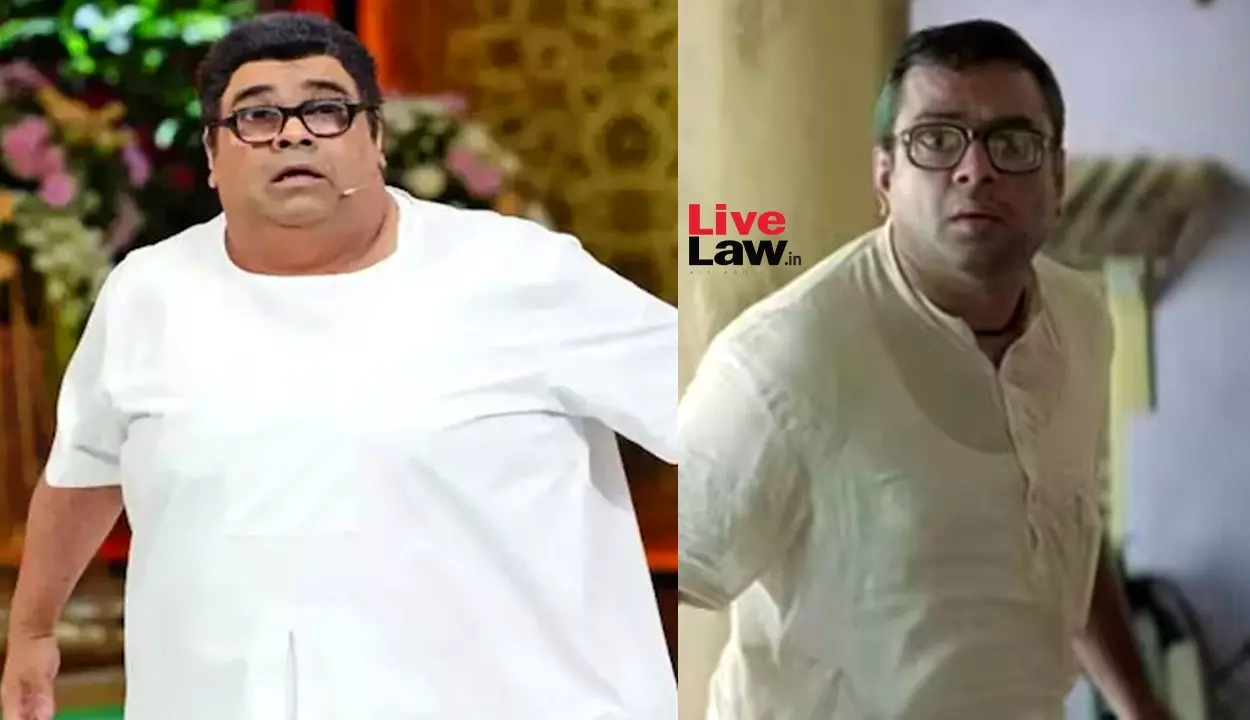
When comedy meets the copyright declare, the laughter comes with a heavy receipt. The gag has proved costly for Netflix and Kapil Sharma’s staff, who had been served with a ₹25 crore authorized discover over the efficiency of an iconic character Baburao Ganpatrao Apte[1].
On 22nd September 2025, a authorized discover was served in opposition to Great Indian Kapil Show airing in Netflix ready to air its ultimate episode with Actor Akshay Kumar. The authorized controversy emerged when Firoz A. Nadiadwala, the producer and the proprietor of “Hera Pheri” franchise objected over comic Kiku Sharda’s portrayal of Baburao within the Netflix present claiming it to be a non-innocent act. To him, the efficiency misused Baburao character for industrial acquire with out taking his prior permission earlier than airing the episode. He claims that this can be a blatant violation of two of his mental property proper -copyright and trademark. He emphasised that Baburao just isn’t solely a personality in “Hera Pheri” Franchise but in addition the guts and soul of the film and nobody can hijack it with out his consent.
On the opposite aspect, the Netflix collectively the Kapil Sharma’s staff maintained that-the Act was a transparent parody and this specific designed purely for humour. The Act was an exaggerated efficiency performed for laughter and arguably transformative. It did neither have an effect on the filmmaker’s enterprise nor eat into their market.
This is not the primary time India has seen such disputes. The Delhi High Court in Sholay Media v. Parag Sanghavi (2015)[2] protected the movie Sholay and its characters from being copied in unauthorised remakes, underscoring their cultural and industrial weight. The Baburao case now asks whether or not that very same protect extends even to parodies.
The points goes past a single efficiency. This controversy raises an necessary query amongst India’s movie fraternity, artistic groups relating to using one’s fictional character below truthful use and authorized implications that may include this and are the authorized system competent sufficient to attract this line?
Characters as Intellectual Property
Fictional characters are usually not solely imaginary characters however possess sturdy market worth and industrial significance. Under Copyright Act 1957, as soon as a personality is developed with ample originality and distinctive particulars that distinguish them from bizarre, they turn into topic of authorized safety. The Copyright Act 1957, permits creator to breed, adapt and share their work as per part 14 of this Act[3]. Section 51 of the identical punishes any unauthorised use which isn’t consented by the proprietor[4]. In the landmark case of RG Anand V. Deluxe Films (1978)[5], the Supreme Court of India clearly laid down that- While Ideas can’t be made a topic of copyright, distinctive characters and their expressions will be.
Other than Copyright Trade Mark Act, 1999, additionally protects fictional characters as brands- their distinctive id equivalent to Names, photographs and even catchphrases will be registered and part 29 restricts any unauthorised industrial use[6]. The Bombay High Court within the case of Star India V. Leo Burnett (2003)[7] recognised time that Tv characters can act as industrial identifiers, establishing the precept of “character merchandising”. Expansion of authorized jurisprudence on this matter can the seen in lots of circumstances one such landmark case is the case of Amitab Bachchan V. Rajat Nagi (2022)[8], the Delhi High Court stopped the unauthorised use of the Actor’s title, picture, recognizing {that a} celeb persona itself constitutes a helpful proper. By this logic actual life personalities are entitled to such safety then fictional characters might be protected in comparable method.
Parody and Free Use
Yet, the copyright legislation would not bestow the creators with an absolute proper over their work. Section 52 of Copyright Act[9] permits for “fair dealing”, together with parody and satire. The basis of this part will be understood by the lens of Article 19(1)(a) of the Constitution of India, which ensures freedom of speech and expression. Comedy, satire, and parody are usually not merely leisure however a type of social and political critique, occupying a central place inside expressive freedom. Imagine if each standup-comedian, mimicry artist or any impersonator needed to get hold of permission earlier than each joke, the essence of inventive freedom would choke and essence of comedy could be strangled.
What is fascinating is that different nations are going through comparable issues that we face proper now. In Campbell V. Acuff Rose Music (1994)[10], the US Supreme Court held that- Parody can be thought-about as “Fair use”, even when is making a living out of it, so long as it provides new which means to authentic work. Likewise, The European Union treats parody for granted given to inventive and artistic freedom drawing safety from part 10 of the European Convention on Human Rights (ECHR). In the case Deckmyn v. Vandersteen (2014)[11], the Court of Justice of the European Union (CJEU) clarified that parody has its distinct id within the mental property legislation of EU. While it refers back to the authentic work, it ought to stay distinctive. Its objective ought to be to generate humour and to not promote hatred, defamation discrimination, within the guise of free speech. This framework demonstrates how EU efficiently managed to maintain a stability between the 2 rights. It is fascinating to notice that EU situates parody with broader safety by rooting it within the constitutional proper linked to free expression, recognizing its position in democracy and creativity in contrast to India the place parody is barely touched by Section 52 of the Copyright Act.
Court has developed itself in recognizing what’s a real parody from distasteful act within the title of parody. In Warner Bros V. RDR Book (2008)[12] an unauthorized Harry Potter “Lexicon” as a result of it reused characters storyline with out including something new from their finish. The rule is straightforward: parody is barely permissible when it transforms the unique quite than driving on the unique work.
Drawing the Line
The moot query is how to attract the road between violation of mental property proper and truthful use. The reply lies in three assessments.
- Market impact- A parody is problematic when it hurts the enterprise of the unique creator. The goal of Copyright legislation just isn’t solely to credit score creator for his or her authentic work but in addition to guard their revenue. If parody, eats the market of authentic creator or diminish its worth or spoils the possibilities of incomes in future then such an act goes past innocent enjoyable. The Sholay Media V. Parag Sanghvi case (2015) confirmed this clearly. The Delhi Hight court docket on this case dominated that Sholay and its character are seen as helpful cultural and industrial belongings. Blatantly copying them in one other film would have an effect on their market worth. Therefore, the court docket held that when these so-called parody impacts the cash or popularity of the unique, it’s seen as an infringement and never as truthful use.
- Substantiating of Copying- One of the important thing query courts examines is how a lot of the unique is used straight with out transformation. If an impersonation straight lifts the well-known dialogues, names, look, fashion, voice, physique language or any idiosyncrasy of the character with out a lot of change, it straight comes below the class of copyright and trademark violation as a result of viewers goes to observe comparable characters over and over. In such situation parodies are merely stealing the concepts of authentic content material.
- Transformative Purpose- The most necessary consider deciding whether or not a parody is truthful use is whether or not provides one thing to the unique creation. A parody ought to add new which means to authentic. For instance, exaggerating quirks of Baburao to showcase struggles in day-to-day life or utilizing his fashion to point social satire could be thought-about as transformative as a result of the parody is saying one thing new and contemporary then what was in authentic movie
The thought was recognised in Campbell vs Acuff-Rose Music (1994)[13] the place the Supreme Court of U.S. court docket held that even a parody that’s making a living can nonetheless be thought-about as truthful use so long as it’s transformative and including new layer to the unique.
The stability ought to be maintained with a view to shield parody and satire but in addition stopping the misuse of character for cashing on them with out permission.
Why It Matters Beyond Baburao
The struggle is not only a few single Netflix sketch. The final result has completely different implication for various folks.
- For Judiciary, it presents a chance to clear algorithm as to who owns the character and the way rights relating to them is to be ruled very like RG Anand did many years in the past.
- For OTT platform, it’s a reminder that they should take permissions earlier than continuing with a easy comedian act.
- For performers and comic, it creates nervousness – if any parody can land them in a problematic scenario freezing on creativity and inculcating concern of their thoughts
- For Audience the problem is equally essential: will they get pleasure from daring and fearless comedy, or diluted and sanitised comedy.
The legislation should stroll on the tight rope. Too a lot safety will smother humour, equally an excessive amount of management will deter creators from making a exceptional character. If the court docket will get the stability proper, they will shield each artistic legacies of Indian cinema whereas preserving inventive freedom of Indian comedians. And maybe, in true Baburao fashion, that might be the true “correct” determination.
Views Are Personal.
-
. Netflix, Kapil Sharma Show Face ₹25 Crore Legal Notice over Baburao Sketch’ The Hindu (New Delhi, 22 September 2025). ↑
-
Sholay Media and Entertainment Pvt Ltd v Parag Sanghavi 2015 SCC OnLine Del 13934 (Del HC). ↑
-
Copyright Act 1957 (India), s 14. ↑
-
Copyright Act 1957 (India), s 51. ↑
-
RG Anand v Deluxe Films (1978) 4 SCC 118 (SC). ↑
-
. Trade Marks Act 1999 (India), s 29. ↑
-
Star India Pvt Ltd v Leo Burnett (India) Pvt Ltd (2003) 27 PTC 81 (Bom HC). ↑
-
Amitabh Bachchan v Rajat Nagi 2022 SCC OnLine Del 3647 (Del HC). ↑
-
Copyright Act 1957 (India), s 52(1)(a). ↑
-
Campbell v Acuff-Rose Music, Inc 510 US 569 (1994) (USSC). ↑
-
Deckmyn v Vandersteen (C-201/13) EU:C:2014:2132 (CJEU). ↑
-
. Warner Bros Entertainment Inc v RDR Books 575 F Supp second 513 (SDNY 2008). ↑
-
Campbell v Acuff-Rose Music, Inc 510 US 569 (1994) (USSC). ↑